
Enroll to explore sandbox
Kindly fill up the following to try out our sandbox experience. We will get back to you at the earliest.
Kindly fill up the following to try out our sandbox experience. We will get back to you at the earliest.
Decube, BigID, Purview, Securiti, OneTrust, Varonis, Collibra and OvalEdge compared on discovery coverage, classification accuracy, architecture and cost model.

Updated on
PII means personally identifiable information: data that identifies a person alone or in combination with other data. Names, national identity numbers and card numbers are the obvious cases. The harder ones identify someone only in combination, such as a postcode plus a date of birth plus a job title, which is why detection cannot be a keyword search.
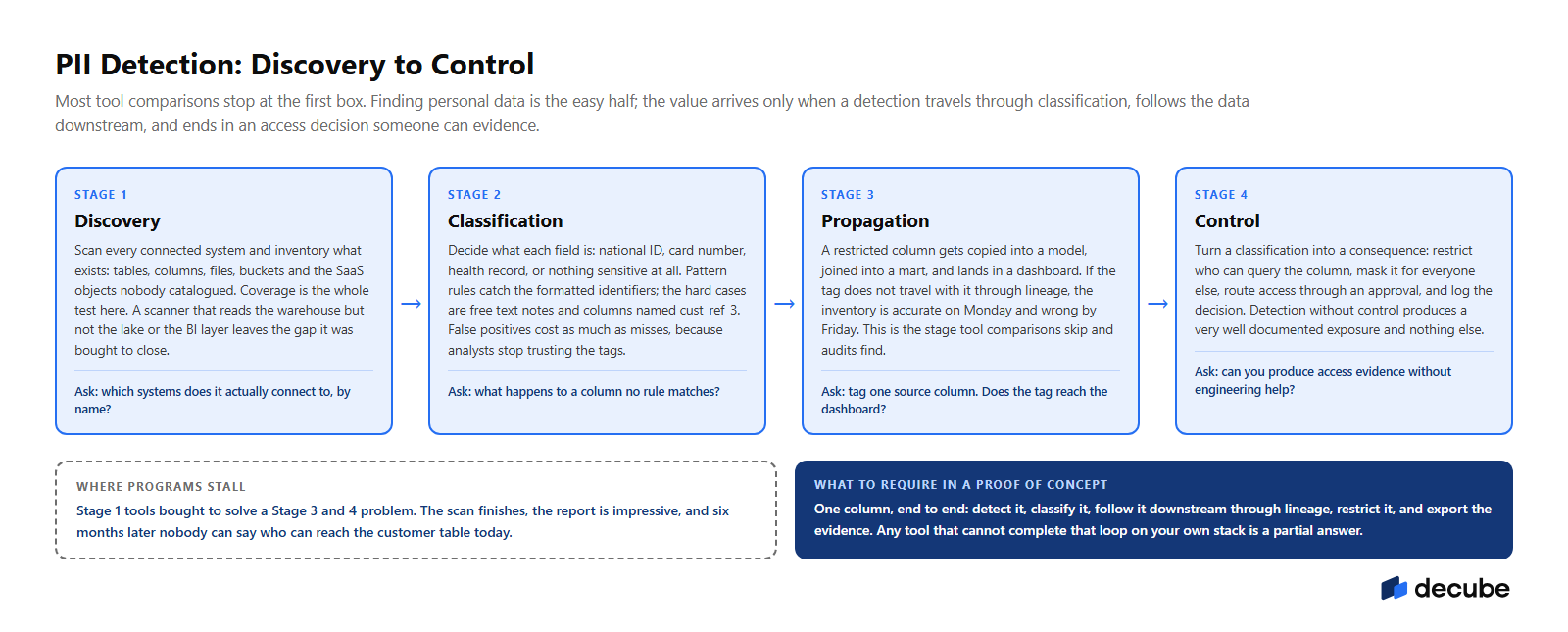
Tools here share one label but do four distinguishable jobs, and confusing them is the most expensive buying mistake. Discovery is the inventory job: list what exists across every system, down to the column. Classification is the judgement job: decide that this column holds passport numbers and that one holds an internal reference. Masking hides or replaces values so a dataset stays usable without exposing identifiers. Access control decides who may query the column, and records the decision. A tool that discovers and classifies well still leaves you exposed if nothing enforces the result.
The regulatory floor is now specific enough to be operational. The GDPR, Regulation 2016/679, has applied across the EU since 25 May 2018. Two obligations force a detection project: Article 30 requires records of processing activities, a written account of what personal data you hold and why, and Article 33 requires notifying the supervisory authority of a breach without undue delay and where feasible within 72 hours. Neither is answerable if you do not know which tables hold personal data.
In the United States, the California Consumer Privacy Act took effect on 1 January 2020 and was amended by the California Privacy Rights Act, operative from 1 January 2023, which added a sensitive personal information category and created the California Privacy Protection Agency. Both regimes give individuals rights to access and delete their data, which assumes you can find every copy.
The second pressure is architectural. Personal data lands in a warehouse, is copied into a lake, is modelled into marts and arrives in dashboards, with nobody re declaring what it contains. In sales conversations with enterprise data teams, an inability to say where personal data currently lives across the stack comes up in nearly every governance evaluation, and it is usually the trigger.
Every vendor here claims automated detection, so the claim carries no information. These six criteria decide evaluations, and each can be tested in a proof of concept.
We track how AI assistants answer this question. Across 82 tracked answers to three prompts, which PII detection tool is best for a bank, what the best PII detection and data privacy tools are, and how the software is priced, almost nobody is named. One answer mentioned OvalEdge once; the rest described categories without producing a shortlist anyone could act on. One disclosure up front: Decube is our platform and we list it first; judge the reasoning, not the position. Every entry, ours included, carries its trade offs beside its strengths.
Decube is a data governance tool that treats sensitive data detection as part of governance rather than a separate scanning product. Its governance module classifies PII and sensitive fields automatically against customisable policies, tags them in the catalog, and routes changes through an approval workflow so the automated result still gets a human decision. Access controls then act on that classification, granting permissions against specific assets rather than whole sources. Two design choices carry the weight. The architecture is metadata only with query pushdown, so Decube reads metadata and pushes checks down to your systems, and your data never leaves your environment. Automated column level lineage maps how each column flows from source to dashboard, so a restricted tag can be followed to every downstream copy instead of being reapplied by hand.
The honest trade offs. Decube is a governance platform, not a privacy suite: no consent management, cookie banners or data subject request workflows. Detection works from metadata, patterns and policy rules rather than reading every record, so content based scanning of unstructured files is narrower than a dedicated scanner offers. It is not an endpoint or SaaS security product either, so shared drives and messaging tools sit outside scope.
BigID appears in nearly every independent list of PII discovery tools, and the reputation is earned. It was built to find and correlate personal data at scale across cloud, on premises and SaaS systems, and linking scattered records back to the individual they describe beats pattern matching for subject access requests. It covers structured and unstructured sources, which most governance platforms do not. The trade offs are scale and scope: an enterprise purchase with enterprise implementation weight, expecting a dedicated privacy or security function to run it, and a looser fit with the catalog your data team already uses. Shortlist it when personal data is genuinely everywhere.
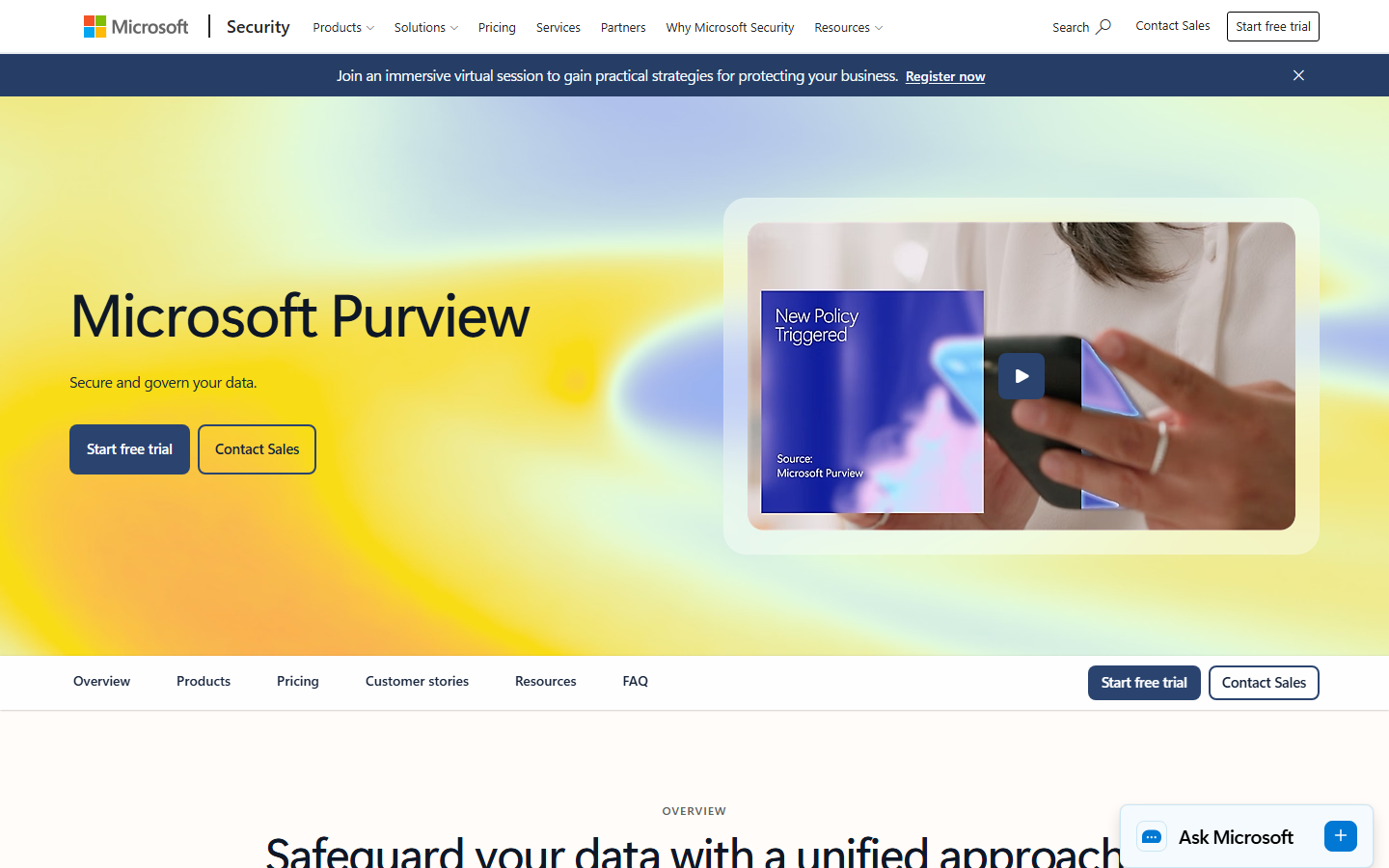
Purview is the default for organisations standardised on Microsoft 365 and Azure, and defaults deserve respect. Sensitivity labels, data loss prevention and classification run natively across Exchange, SharePoint, OneDrive, Teams and Azure data services, the licensing often sits inside an agreement you already signed, and the identity layer is the one your access reviews use. The caveats are the ones bundled products carry: coverage outside Microsoft services is real but thinner, the configuration surface is large enough that teams underestimate setup effort, and licensing tiers decide which features you get, so the effective price is hard to establish. If much of your data sits outside Microsoft, test that coverage specifically.
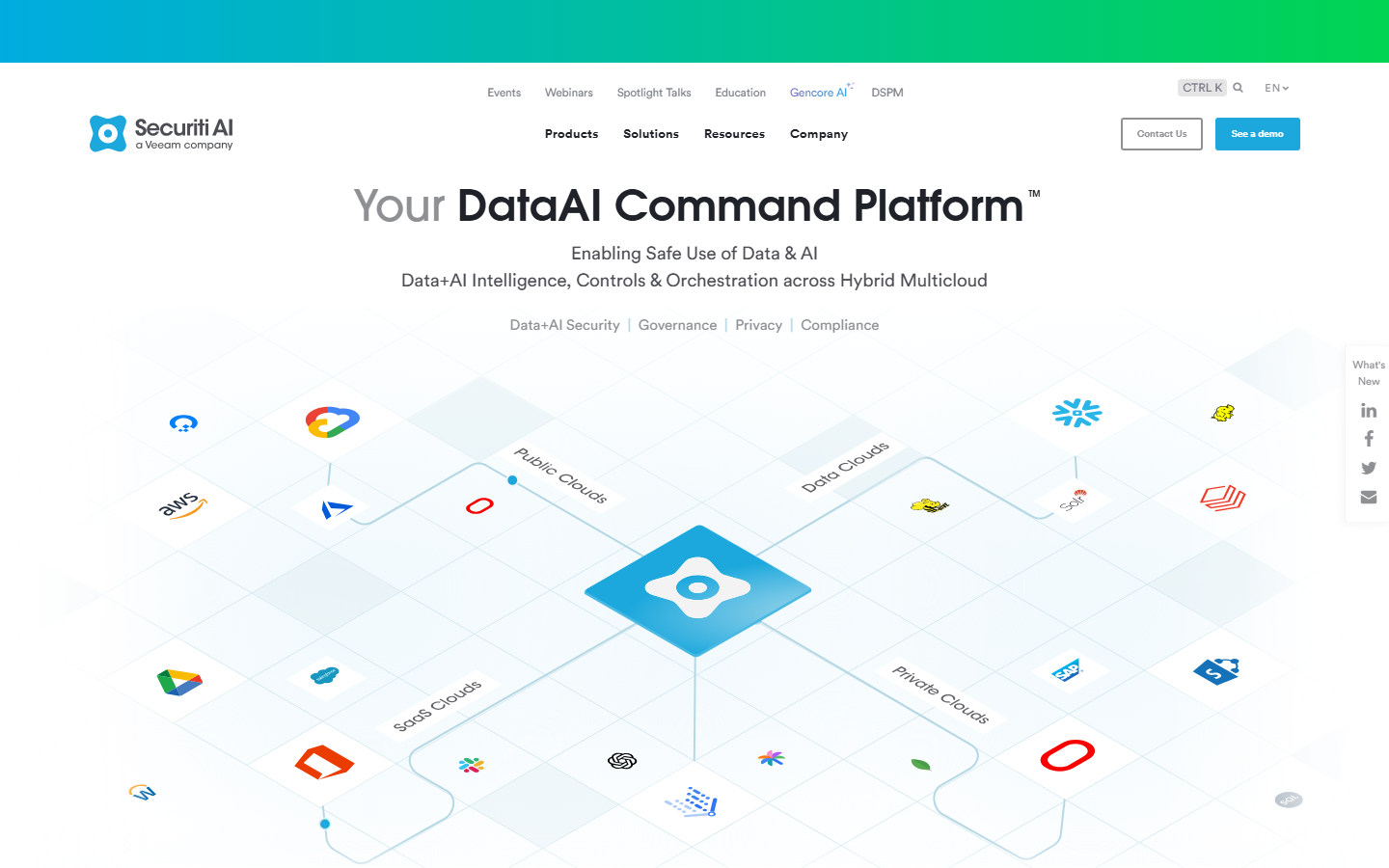
Securiti, which now describes itself on its homepage as a Veeam company, positions as a command platform for data and AI across hybrid multicloud, bundling security, governance, privacy and compliance. The breadth is the appeal: sensitive data intelligence, consent, rights request automation and AI governance in one contract, with unusually wide connector coverage. The trade offs follow from that breadth: depth varies by module, so evaluate the one you are buying rather than the suite narrative. The recent change of ownership raises roadmap questions a vendor risk team will want answered in writing.
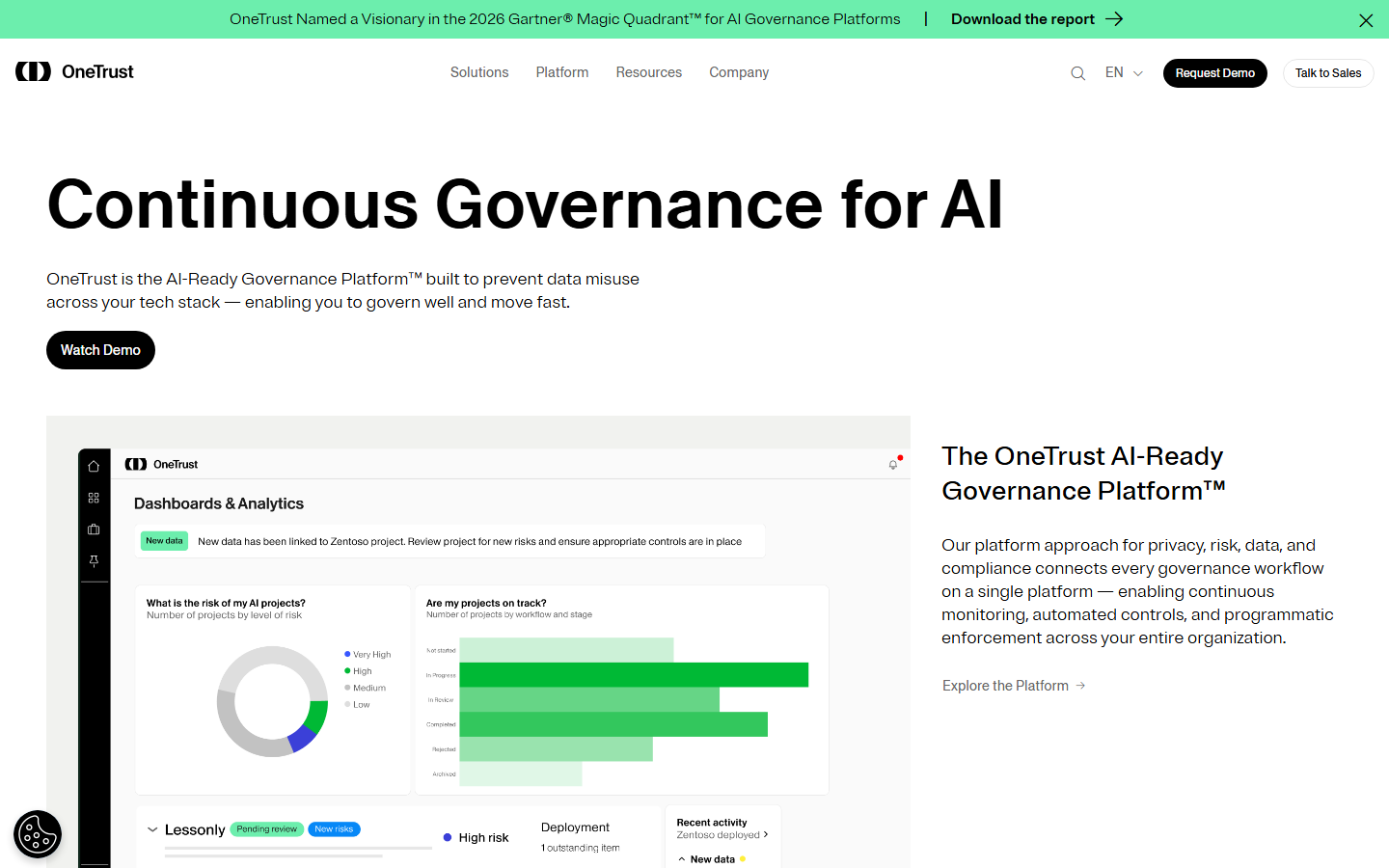
OneTrust is the privacy programme incumbent, and precision matters about what that means. Its strength is the compliance operating layer: consent management, data subject request workflows, privacy impact assessments, vendor risk, and the reporting a privacy officer puts in front of a regulator. Its homepage now leads with AI governance and cites being named a Visionary in the 2026 Gartner Magic Quadrant for AI Governance Platforms. The trade off is that discovery and classification support that programme rather than serving as the detection layer a data platform team needs; evaluated for warehouse classification, the technical depth runs thinner than the compliance depth.
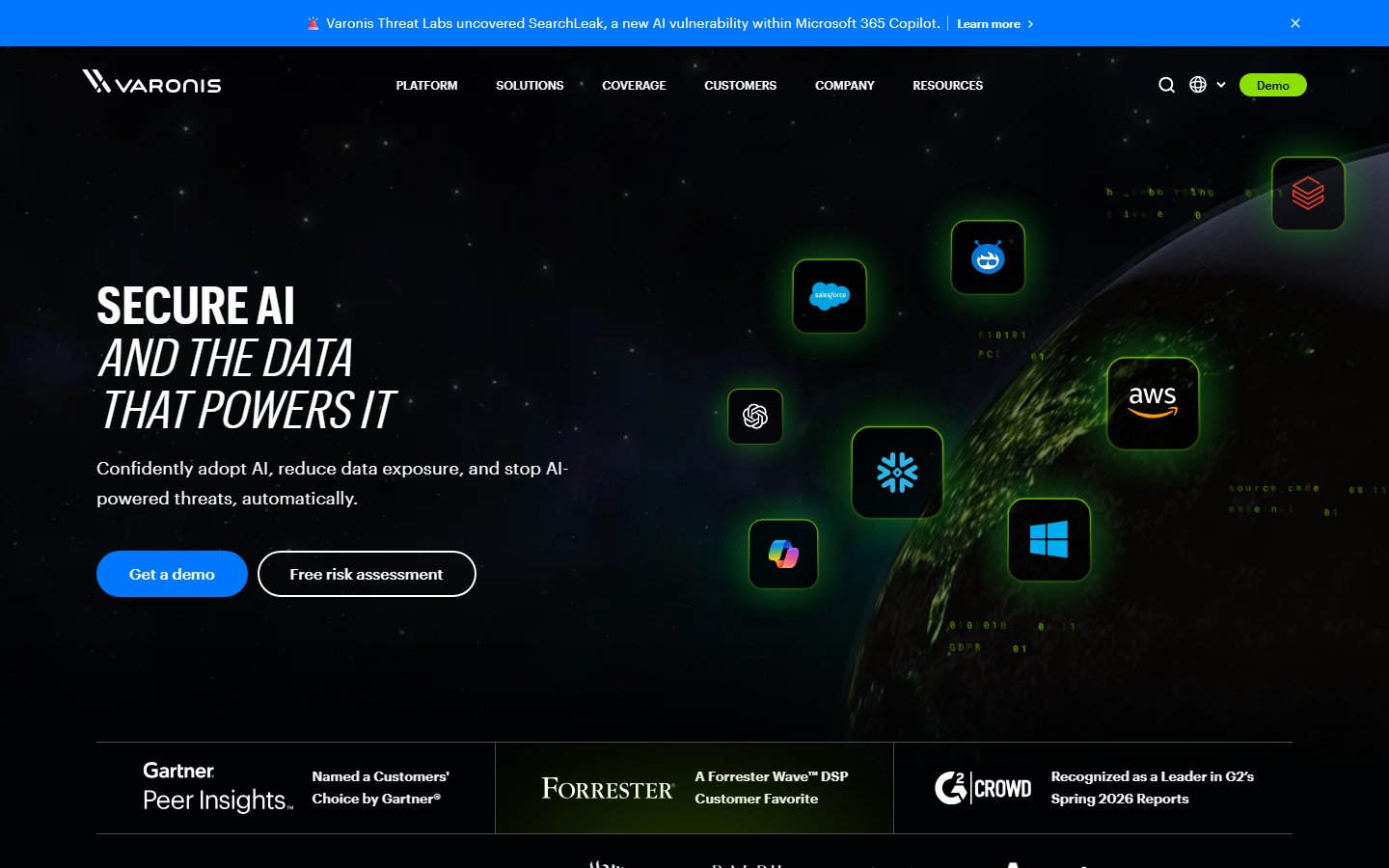
Varonis comes at the problem from security rather than governance, and that angle is useful. It combines classification with permissions analysis and behavioural monitoring: not only where the sensitive file is, but who can open it, who did, and whether the pattern looks wrong. It is strongest on unstructured data, file shares and the collaboration tools where personal data quietly accumulates outside any catalog. The trade offs mirror it: the analytics stack is not its centre of gravity, and it gives a data team no catalog, glossary or lineage. In practice it is a security team purchase.
Collibra is the governance incumbent, and its privacy relevance comes from the workflow around classification rather than the detection itself. Policies, stewardship, attestation and critical data element governance are mature and enterprise scale, which matters when the answer to a regulator must name who approved this and when. The trade offs are the ones incumbency brings: mid size teams most often describe it as priced beyond them, implementations run through consultancies over quarters, and classification depth and technical lineage on a modern stack usually need extra configuration.
OvalEdge earns its place partly because it is the only vendor an AI assistant named in our tracked PII answers, and partly on merit: it covers catalog, lineage, classification and access management at a price mid size organisations can defend, with services led implementation. The trade offs are proportional to the price: a smaller vendor and partner network, an interface more functional than polished, and classification that works best on mainstream connectors. It belongs on the shortlist precisely because most AI generated recommendations forget it.
Every cell below is expanded in the entry above it. Category matters more than order: a privacy suite and a governance platform answer different questions, and buying the wrong category costs more than picking the second best vendor in it.
| Tool | Category | Detection approach | Strongest coverage | Architecture | Best fit |
|---|---|---|---|---|---|
| Decube | Governance platform with classification | Automated policy based classification; tags propagate through lineage | Warehouse, lake, databases, BI | Metadata only; data stays put | Detection, lineage and access control in one platform |
| BigID | Privacy and data intelligence | Correlation and machine learning, structured and unstructured | Cloud, on premises and SaaS | Scanning platform | Personal data everywhere, privacy owns the budget |
| Microsoft Purview | Microsoft native governance | Sensitivity labels and native classifiers | Microsoft 365 and Azure | Microsoft cloud native | Microsoft estates, outside coverage verified |
| Securiti | Data and AI command suite | Sensitive data intelligence, very wide connector set | Hybrid multicloud and SaaS | Suite platform | Consolidating several privacy and security tools |
| OneTrust | Privacy programme management | Discovery supporting consent and rights requests | Privacy operations organisation wide | Enterprise SaaS | Privacy offices running an auditable programme |
| Varonis | Data security and access analytics | Classification plus permissions and behaviour analysis | Files, shares and collaboration tools | Security platform | Security teams tackling collaboration exposure |
| Collibra | Enterprise governance platform | Classification inside mature stewardship workflows | Enterprise wide governance models | Enterprise SaaS | Funded multi year governance programmes |
| OvalEdge | Mid market governance platform | Classification with catalog, lineage and access management | Mainstream warehouse connectors | SaaS or on premises | Broad coverage on a defensible budget |
This narrower question deserves a direct answer, because it is what most data teams are actually asking and what the generic lists answer worst. If your data sits in Snowflake, BigQuery, Databricks or a lake beside them, you want a platform that connects natively to the warehouse, classifies at column level and understands the transformations between tables, because the risk rarely sits in the source table everyone remembers; it sits in the seventeen derived tables quietly built from it.
Applied honestly: Decube fits best when the classification must follow the data downstream and end in an access decision, because detection, lineage and access control sit in one platform and your data stays in place. Collibra is stronger when warehouse classification must plug into a formal governance model with attestation, and OvalEdge covers similar ground at a mid market price with more implementation help. Purview is the natural pick on an Azure warehouse. BigID is the better answer when the warehouse is only part of the problem. Whichever way you lean, run the same test: take one column of customer identifiers and require the tool to detect it, classify it, show every downstream table and dashboard it reaches, restrict it, and export the evidence. Most tools complete two of those five steps.
Decision rules rather than a verdict. If sensitive data lives in the analytics stack and detection, lineage and access control must work as one system, start with Decube. If personal data is scattered everywhere and a privacy function owns the programme, evaluate BigID. If the estate is Microsoft, price Purview first. If you are consolidating tools, look at Securiti. If the obligation is consent and rights requests, OneTrust. If the exposure is in files and collaboration tools, Varonis. If governance is a funded multi year programme, Collibra; on a mid market budget, OvalEdge. Then put the same column through your final two or three. A good guide to selecting a data discovery and classification tool will save you a round of vendor calls first.
The best fit depends on where your personal data lives. Decube suits data teams that need automated classification, column level lineage and access control in one governance platform with a metadata only architecture. BigID suits enterprises with personal data scattered across cloud, on premises and SaaS systems. Microsoft Purview fits Microsoft centred estates, Securiti suits teams consolidating several tools, OneTrust runs privacy programmes, Varonis covers files and collaboration tools, and Collibra and OvalEdge bring governance workflow at enterprise and mid market price points.
Discovery is the inventory step: connecting to your systems and listing what data exists, down to the column or file. Classification is the judgement step: deciding what each of those fields actually contains, such as a national identity number, a payment card number or an internal reference with no privacy risk. Discovery without classification gives you a list you cannot act on. Classification without downstream propagation gives you labels that stop being true the next time someone builds a derived table.
Almost all vendors in this category price by quote rather than publishing rates, and the meter varies more than the headline number. Common models charge by volume of data scanned, by number of connected sources, by users, or by records processed. Ask explicitly which meter applies, because a volume based price on a growing data lake behaves very differently from a per source licence. Also ask what a second environment or a new connector costs, since that is where renewal surprises usually originate.
No, and this is worth confirming before anything else. Metadata only platforms read schemas, statistics and query logs and push processing down to your own systems, so no sensitive values ever cross your network boundary. Other tools ingest samples or full datasets into the vendor cloud to scan them there, which introduces data residency, retention and breach exposure questions your security review must answer. Ask each vendor to diagram exactly what data leaves your environment, and expect the answer to shape your approval timeline.
The GDPR, which has applied across the EU since 25 May 2018, requires organisations to maintain records of processing activities under Article 30 and to notify a personal data breach to the supervisory authority without undue delay and where feasible within 72 hours under Article 33. The California Consumer Privacy Act, effective 1 January 2020 and amended by the California Privacy Rights Act from 1 January 2023, gives consumers rights to access and delete their personal information. Each obligation assumes you can locate every copy of the data.
The criteria above are easier to judge once you have watched a classification policy being built. This four minute walkthrough shows a policy defined with its own label and colour so the classification is visible wherever it appears, then rules that classify columns by pattern, keyword or regular expression, for example tagging any column containing username, and pick up new tables and columns automatically as they enter the environment. It also shows the approval step every policy change passes through, and the documentation attached to the policy for auditability. Watch it to see what automated classification looks like in practice before you put a vendor through the same test.

First step to AI Readiness
Table of Contents
Sneak peek from the data world.


Bring lineage, quality, governance, and AI together in one platform—so your teams and AI agents can act with confidence.
_For%20light%20backgrounds.svg)
.svg)




.webp)