
_For%20light%20backgrounds.svg)
How a Leading Nordic Energy Company Saved 10 Hours a Week on Metadata with Decube

Energy & Utilities

Nordics
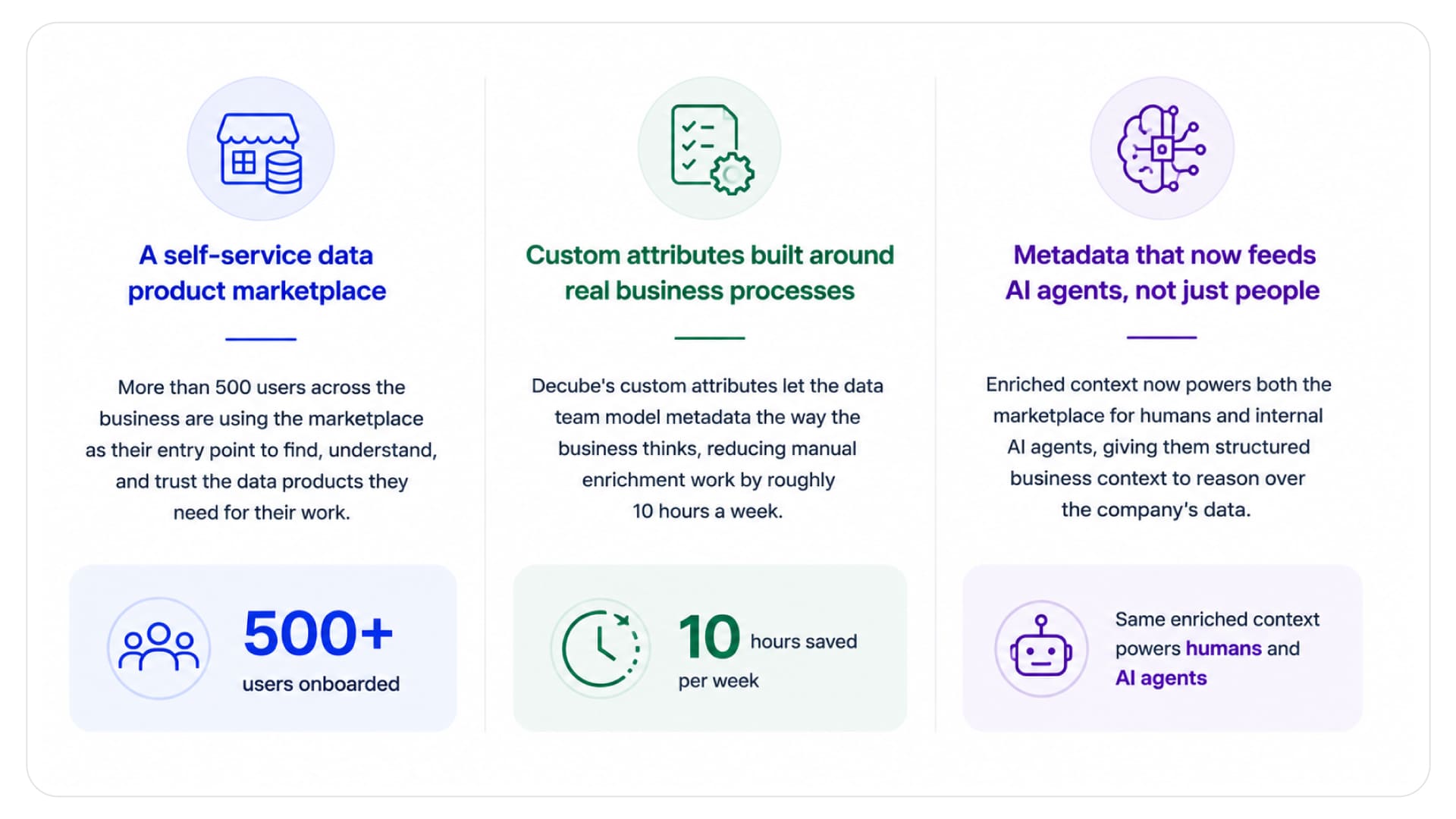
A leading energy company in the Nordics transformed fragmented metadata into discoverable, well-described data products, onboarding 500+ users while saving roughly 10 hours a week on metadata work.
Key outcome
10 hours saved weekly
Roughly 10 hours saved per week on metadata work
Decube modules
Metadata Management
Data Products Marketplace
Custom Attributes
Regulatory driver
Danish Energy Agency DEM

.svg)


