The company partnered with Decube to build that foundation, deploying automated data lineage, a business-facing data catalog, and proactive observability on top of its existing warehouse and pipeline estate, unified into a single governance layer rather than three disconnected tools.
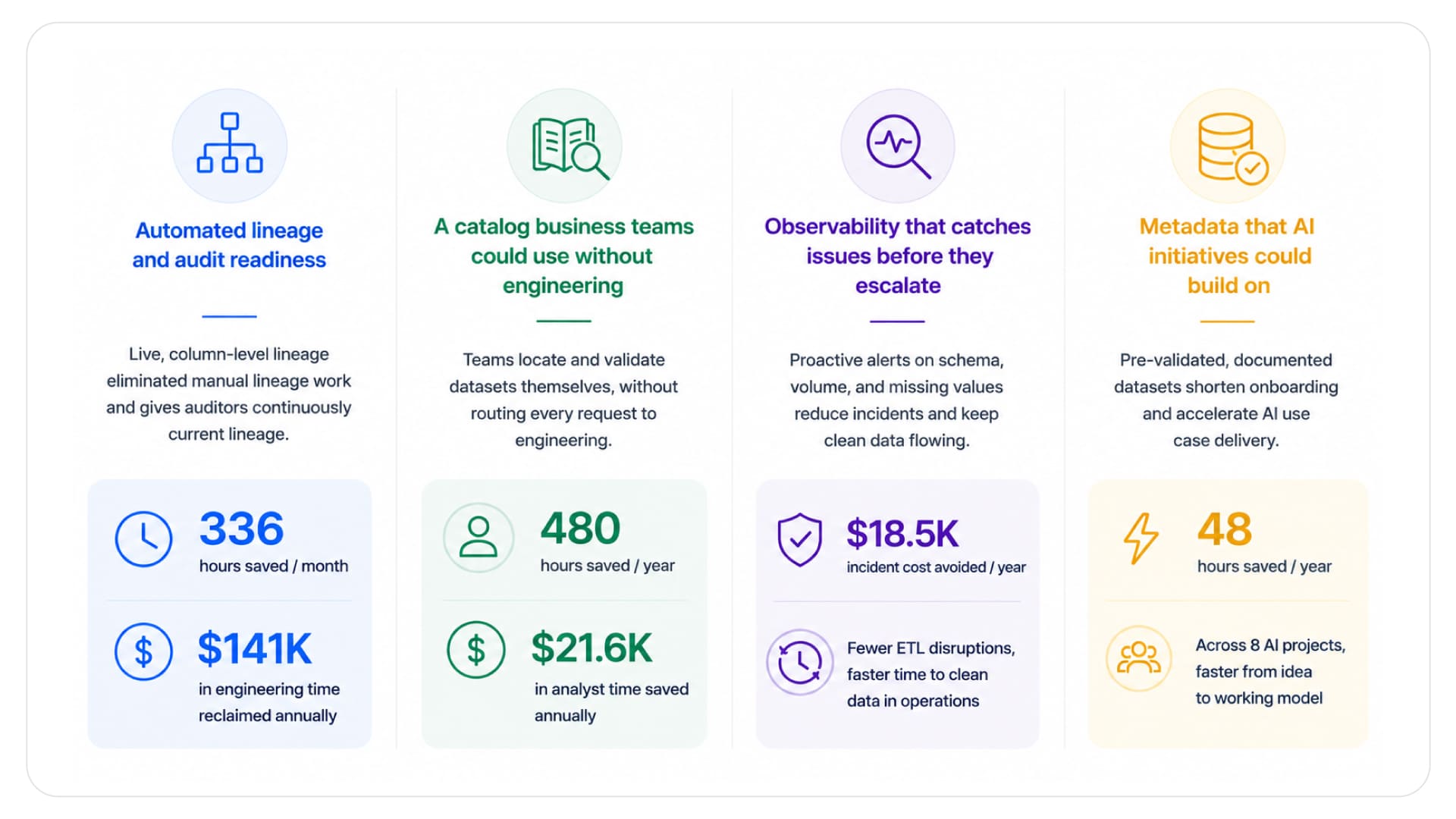
Live, column-level lineage and audit trails replaced manually maintained ERD diagrams and spreadsheets, giving both engineering and audit teams real-time visibility into how data moved and transformed. A shared data catalog let product, compliance, and fraud teams find and validate datasets on their own, without routing every question back to engineering. Observability was layered in to flag schema changes, missing values, and volume anomalies upstream, before they reached downstream dashboards or operational teams. As the metadata layer matured, it also became the foundation for the company's AI initiatives, giving machine learning teams pre-validated, documented datasets to build on instead of tribal SQL knowledge.
Rollout moved quickly because of Decube's connector model. Using a read-only service account and native connectors spanning SQL engines, file formats, and hierarchical data, the team connected more than 30 databases and file sources within weeks, without re-architecting a single pipeline.

_For%20light%20backgrounds.svg)



.svg)


